
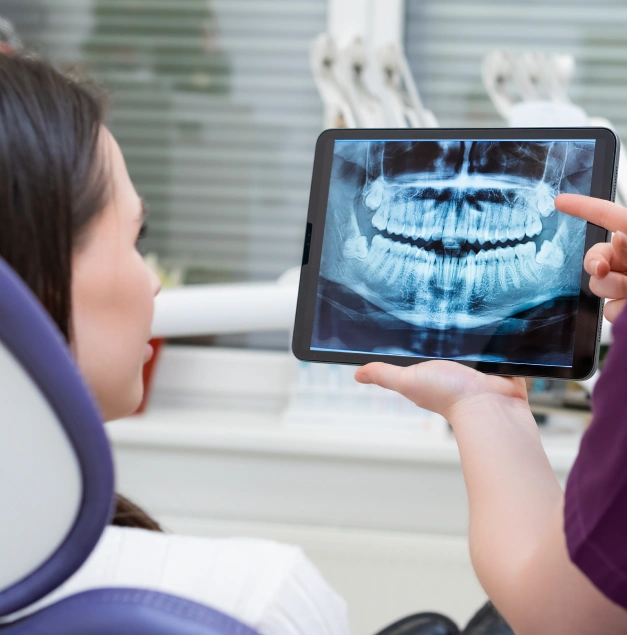
Detecting Hidden Dental Concerns With Digital X-Rays
A routine visual examination cannot always reveal dental concerns developing beneath the surface. Cavities between teeth, changes in the jawbone, impacted wisdom teeth, and infections around tooth roots may not be visible during a standard exam. Digital X-rays provide detailed images of areas that are difficult to see directly, helping our team identify potential concerns and develop an appropriate treatment plan.
At Valley Family Dentistry in Livermore, CA, digital imaging is an important part of comprehensive dental evaluations. Digital X-rays provide clear images that can be viewed and assessed efficiently while using less radiation than traditional film-based X-rays. When recommended as part of your examination, this technology gives our team additional information to support accurate diagnosis and personalized care.
Schedule Your ConsultationWhat Can Digital X-Rays Detect?
Digital dental X-rays may help identify or evaluate a range of oral health concerns that are not always apparent from symptoms alone. Depending on the type of imaging performed, X-rays may assist in evaluating:
- Tooth decay between or beneath tooth surfaces
- Dental infections and abscesses
- Changes around tooth roots
- Bone loss associated with periodontal disease
- Impacted or developing teeth
- Tooth fractures or structural changes
- The condition of certain existing restorations
- Abnormal changes in the jaw or surrounding structures
Not every patient needs X-rays at every appointment. The dental team can determine when imaging is appropriate based on your dental history, symptoms, age, risk factors, and clinical findings.
Who Is Digital X-Rays for
Nearly every patient benefits from digital X-rays as part of a comprehensive dental exam, though frequency depends on individual risk factors and dental history. New patients typically receive a full set of X-rays to establish a baseline understanding of their oral health.
Patients with a history of frequent cavities, gum disease, or previous dental work often need imaging more regularly to monitor changes over time. Children benefit from X-rays as their permanent teeth develop, helping identify issues like crowding, impacted teeth, or early decay while treatment options remain simple.
How the Digital X-Ray Process Works
Digital X-rays are generally quick and straightforward. The exact imaging process depends on the type of X-ray needed and the area being evaluated.
Review Your Dental Needs
The dental team will consider your dental history, current concerns, previous imaging, and findings from your examination. This helps determine whether dental X-rays may provide useful diagnostic information.
Position You for Imaging
You will be positioned appropriately for the selected type of dental X-ray. Depending on the image being captured, a small sensor or imaging device may be positioned inside or outside the mouth.
Capture the Digital Images
The X-ray equipment captures detailed images of the areas being examined. Digital imaging allows the images to be viewed electronically for evaluation by the dental team.
Review the Findings
The dental team examines the images alongside your clinical examination and dental history. This combined information provides a more complete picture of your oral health.
Discuss Recommended Care
If the images reveal an area that requires attention, the team can explain the findings and discuss appropriate next steps. If no treatment is needed, the images can contribute to ongoing monitoring of your oral health.
Why Digital Imaging Matters for Preventive Care
Regular dental examinations help identify changes in your oral health, but some concerns may develop below the visible surface of the teeth and gums. When X-rays are indicated, digital imaging can provide additional information that supports early detection and informed treatment planning.
Digital dental X-rays can also become part of your dental records, allowing the team to compare images over time when monitoring specific areas. This can help identify changes and provide useful information during future examinations.
Get the Full Picture of Your Oral Health
Digital X-rays help our dental team evaluate areas that may not be visible during a routine examination. At Valley Family Dentistry, digital imaging supports diagnosis, preventive care, and treatment planning when appropriate. If you need an exam or dental imaging, call us at (925) 449-1141 to schedule an appointment in Livermore, CA.
Request an AppointmentFrequently Asked Questions About Digital X-Rays
Most patients need X-rays every one to two years, though those with a higher risk of cavities or gum disease may need them more frequently based on their individual history.
Yes. Digital X-rays use significantly less radiation than traditional film X-rays and are considered a safe, routine part of dental care.
No. The process is quick and painless, though the sensor may feel slightly uncomfortable for a few seconds depending on its placement in the mouth.
Many dental issues, including cavities between teeth and bone loss below the gumline, show no symptoms in their early stages and can only be identified through X-rays.
Dental X-rays are generally considered safe during pregnancy when necessary, especially with modern low radiation equipment and proper shielding, though the dentist will discuss timing and necessity with you directly.
Bitewing X-rays focus on the back teeth to detect cavities between them, while panoramic X-rays capture the entire mouth and jaw in a single wide image for a broader evaluation.
Yes, digital X-rays are safe for children and are often used to monitor developing teeth, detect early decay, and evaluate jaw growth as permanent teeth come in.
Most PPO insurance plans cover a set number of X-rays as part of routine preventive care, though coverage varies by plan. Our team can help verify your specific benefits.