Restore Damaged Teeth With Custom Inlays & Onlays
When a tooth has more damage than a traditional filling can repair but does not require complete coverage, an inlay or onlay may provide a conservative restorative solution. These custom dental restorations are designed to repair specific areas of a damaged tooth while preserving as much healthy tooth structure as possible.
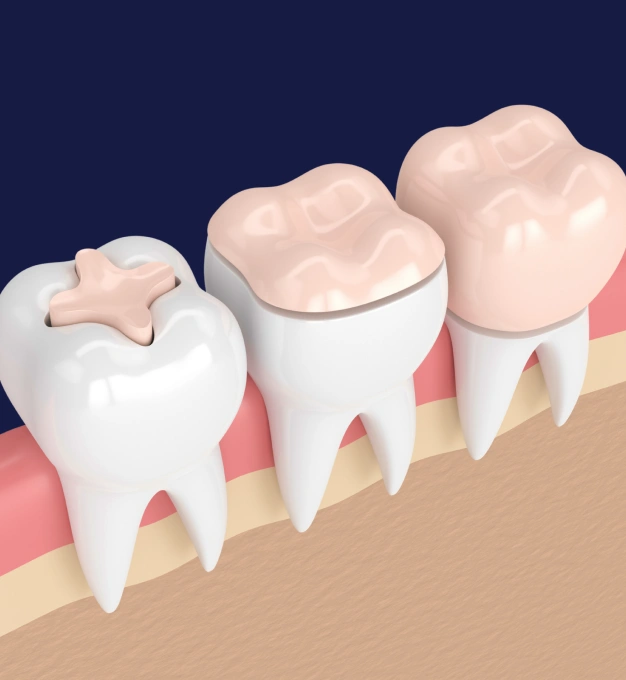
At Valley Family Dentistry in Livermore, CA, inlays and onlays can be used to restore teeth affected by decay, cracks, fractures, worn surfaces, or large existing fillings. An inlay generally fits within the cusps of a tooth, while an onlay can extend over one or more cusps to provide additional support. Depending on the condition of the tooth and treatment plan, tooth-colored materials such as porcelain can create a restoration that blends naturally with the surrounding smile. With the use of advanced CEREC technology, certain inlays and onlays may also be designed and completed efficiently during the treatment process.
Schedule Your Inlay & Onlay ConsultationWhy Choose Inlays & Onlays for Tooth Restoration?
Inlays and onlays offer a precise way to restore teeth that need more support than a standard filling can provide. By focusing treatment on the damaged portion of the tooth, these restorations can help maintain healthy tooth structure while improving strength and function.
- Preserve More of the Natural Tooth: Inlays and onlays are designed to restore only the affected portion of a tooth. This conservative approach can help preserve healthy natural tooth structure.
- Strengthen Damaged Teeth: Decay, large fillings, cracks, and wear can weaken a tooth over time. A custom inlay or onlay can reinforce the affected area and help restore the tooth’s structural integrity.
- Restore Chewing Function: Damage to a molar or premolar can make chewing uncomfortable or affect the way the teeth come together. An accurately fitted restoration can help restore the shape and function of the tooth.
- Create a Natural-Looking Result: Tooth-colored porcelain restorations can be customized to complement surrounding teeth. This makes inlays and onlays a suitable option when both function and appearance matter.
- Address Larger Areas of Damage: A conventional filling may not provide sufficient support when a significant portion of the tooth has been affected. Inlays and onlays can restore broader areas without necessarily requiring full tooth coverage.
- Replace Worn or Damaged Fillings: Old fillings can become worn, cracked, loose, or damaged. In certain cases, replacing the existing restoration with an inlay or onlay can provide a more precise and durable solution.
When Is an Inlay or Onlay Recommended?
An inlay or onlay may be considered when a tooth has sustained moderate damage but still has enough healthy structure to support a partial restoration.
Common situations where these restorations may be appropriate include:
- Moderate tooth decay
- Large or failing fillings
- Cracks affecting the chewing surface
- Fractured areas of a tooth
- Tooth wear caused by long-term use
- Damage caused by dental trauma
- Weakened molars or premolars
- Teeth requiring more support than a traditional filling can provide
- Teeth where preserving natural structure is a priority
An evaluation is necessary before treatment because the extent of damage can vary significantly from one tooth to another. A severely fractured or weakened tooth may require a different restorative approach.
From Damaged Tooth to Custom Restoration
Every inlay and onlay treatment begins with evaluating the affected tooth and determining how much healthy structure remains. The restoration is then planned around the tooth’s anatomy, function, and appearance.
Comprehensive Tooth Evaluation
The affected tooth is examined to identify decay, fractures, worn fillings, or other structural concerns. Imaging may be used when additional information is needed to evaluate the tooth.
Removal of Damage
The tooth is carefully prepared by removing decay, damaged tooth structure, or an existing restoration when necessary. The area is cleaned and shaped to accommodate the new inlay or onlay.
Digital Scanning and Restoration Design
For cases using CEREC technology, digital information can be used to create a detailed representation of the prepared tooth. The restoration is then digitally designed according to the tooth’s shape and functional requirements.
Custom Restoration Fabrication
The inlay or onlay is fabricated using the selected restorative material. Its shape and contours are designed to fit the prepared area while complementing the surrounding tooth structure.
Fit and Bite Evaluation
Before final placement, the restoration is checked for fit, appearance, and bite. Adjustments can be made when needed to support comfortable function.
Final Placement
Once the restoration meets the required specifications, it is securely bonded or cemented into position. The treated tooth is then checked again to ensure the restoration functions properly.
What Materials Are Used for Inlays & Onlays?
The material selected for an inlay or onlay depends on the location of the tooth, the amount of damage, functional requirements, appearance, and treatment plan.
- Porcelain Inlays & Onlays: Porcelain can provide a tooth-colored appearance that blends with surrounding teeth. It is commonly considered when appearance is an important part of the restoration.
- Ceramic Restorations: Dental ceramics can provide a combination of strength and natural appearance. Certain ceramic materials can also be fabricated using digital technologies such as CEREC. The appropriate material will depend on the specific restoration and clinical requirements of the affected tooth.
Caring for Your Inlay or Onlay
Proper oral care plays an important role in protecting both the restoration and the natural tooth underneath it. An inlay or onlay does not make a tooth immune to future decay or damage.
To help maintain the restoration:
- Brush twice daily with fluoride toothpaste.
- Clean between the teeth every day.
- Avoid using the restored tooth to bite hard objects.
- Follow any post-treatment instructions provided by the practice.
- Attend routine dental examinations.
- Report persistent sensitivity, discomfort, or changes in the restoration.
Good daily hygiene can help protect the margins around the restoration and support long-term oral health.
Restore Your Smile With Advanced Inlay & Onlay Care
A damaged tooth does not always require complete coverage. Inlays and onlays can provide a targeted restorative solution when enough healthy tooth structure remains. With custom treatment planning and CEREC technology available for eligible cases, Valley Family Dentistry focuses on restoring damaged teeth with attention to strength, function, and appearance.
If you have a damaged filling, cracked chewing surface, tooth decay, or a weakened tooth, Valley Family Dentistry in Livermore, CA, can evaluate the condition and discuss whether an inlay or onlay may be appropriate.
Schedule Your Inlays & Onlays AppointmentFrequently Asked Questions About Inlays & Onlays
Dental inlays and onlays are custom restorations used to repair teeth affected by decay, fractures, large fillings, or structural damage. An inlay fits within the cusps of a tooth, while an onlay can extend over one or more cusps.
An inlay generally restores damage located within the cusps of a tooth. An onlay provides greater coverage and can extend over one or more cusps. The appropriate option depends on the location and extent of tooth damage.
Inlays and onlays may be recommended when damage is too extensive for a traditional filling but does not require complete tooth coverage. They provide a custom restoration while allowing the treatment to focus on the affected area.
The lifespan of an inlay or onlay depends on factors such as the material, tooth location, bite forces, oral hygiene, diet, and regular dental care. Proper brushing, flossing, and routine dental visits can help maintain the restoration.
Yes. Porcelain inlays and onlays can be made in shades designed to complement surrounding natural teeth. The final appearance depends on factors such as material selection, shade matching, tooth condition, and placement.
The affected tooth is typically numbed before preparation. This helps make the treatment comfortable. Some temporary sensitivity or tenderness may occur after the procedure as the tooth and surrounding tissues adjust.
Yes, CEREC technology can be used to design and fabricate certain inlays and onlays. Digital scanning and computer-aided design can support precise restoration fabrication. Eligibility depends on the condition of the tooth and the specific restoration needed.
Care for an inlay or onlay by brushing twice daily, cleaning between your teeth every day, avoiding habits that can damage dental restorations, and maintaining regular dental examinations. Any unusual sensitivity, discomfort, or damage should be evaluated promptly.